

DEBORAH LITTLEBIRD has a Fine Arts degree from Kendall School of Design and during the 1980s she worked as an Art Director and Graphic Designer in Michigan before relocating to New Mexico in 1991. After her beloved husband, Larry Littlebird passed away in 2025, Deborah returned to her love of making art. She began to explore clay handbuilding as a cathartic practice for being still and present in her grief journey. During this time, she was inspired to create tea bowls and botanical vessels for her land-tea sanctuaries. Today, she combines the subtle nuances of earth, clay and plants to express an elemental beauty in her tea cups, small plates and vases. Through her work, Deborah weaves together artistry, herbal wisdom and reverence of place, creating experiences and objects that honor the interconnectedness of land and spirit.

DEBORAH LITTLEBIRD POTTERY
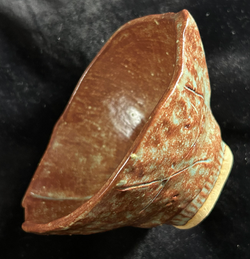
I use the Kurinuki “hollowed out” process to make my tea sanctuary cups. This ancient Japanese handbuilding technique is an intuitive approach of working with clay. The belief is that the vessel already exists in the clay and you are allowing it to reveal itself as you carve and hollow out a solid block of clay rather than constructing a cup.
 |  |  |
|---|---|---|
 |  |  |
 |  |  |
 |  |  |
 |  |  |
 |  |  |
 |  |  |
BOTANICAL TRAYS, TEA BOWLS and KURINUKI CUPS
I use glazes influenced by traditional Japanese tea vessels to enhance the earthiness and textures of my tea ware:
Temmoku Glaze
Traditional Japanese Tenmoku Glaze originated in China during the Song Dynasty (960-1279 AD) as an iron-rich dark glaze used on traditional tea bowls. Japanese monks traveled to China to study Zen in the 13thcentury and brought the dark Chinese tea bowls back to Japan where they started calling this style of pottery “Tenmoku” after the mountain called Tianmu, “Heaven’s Eye Mountain”.
Satin Oribe Glaze
Traditional Japanese Oribe glaze is named after Furuta Oribe, a legendary 16th century samurai and tea master who rebelled against strict symmetrical ceramic traditions. Modern Oribe glazes replicate this classic burnished finish with dark green pools and blue breaking aesthetics.
Matte Shino Glazes
Traditional Shino glazes originated from the Momoyama period (1568-1600), during the golden age of Japanese tea ceremonies. It was designed to support the wabi-sabi philosophy of rustic simplicity, natural beauty and imperfections. Modern Shino glazes are influenced by this humble earthiness of tea ceremony bowls and give a traditional high-iron look to textured clay pieces.
I am currently showing select pottery at Kukani Gallery and coming in 2027 I will have pieces for sale online.